Rule Twists and Their Impact on Baccarat Bonus Accessibility in Digital Casinos
Written by Parker Roth · Aug 13, 2026
Rule Twists and Their Impact on Baccarat Bonus Accessibility in Digital Casinos
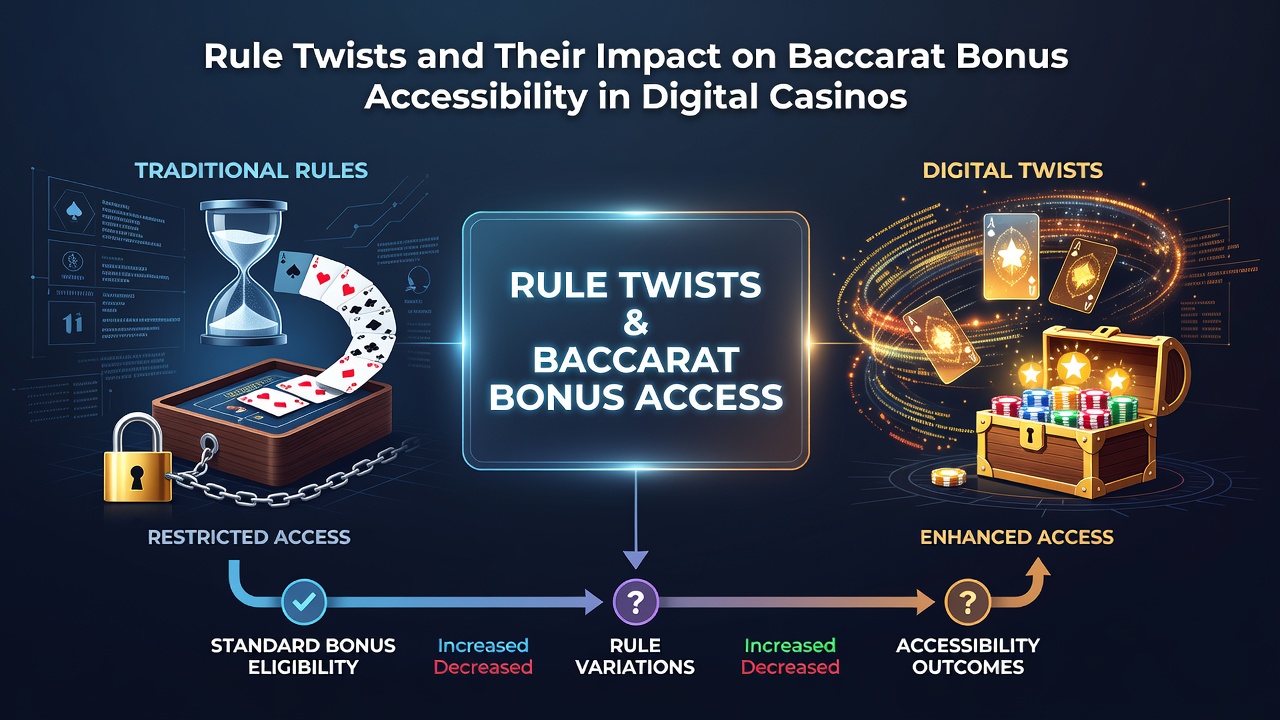
Digital casinos continue to adjust baccarat rules in ways that directly shape which bonuses players can access and how those promotions function across different game variants, and these shifts have become more pronounced as platforms expand their offerings through 2026. Rule modifications such as changes to commission rates, tie payouts, and side bet structures often determine whether a particular bonus applies to standard punto banco or only to specific no-commission versions, creating layers of eligibility that operators enforce through their terms.
Common Rule Variations in Digital Baccarat
Platforms introduce no-commission baccarat where the banker bet pays even money except when it wins with a six, and this format frequently carries separate wagering requirements compared to traditional 5 percent commission games. Operators also alter tie bet payouts from 8 to 1 to 9 to 1 or introduce mini-baccarat tables with reduced deck counts, each change affecting how bonus funds convert during play. Data from multiple operators shows that players encounter these variants more often on mobile interfaces, where quick-session formats encourage the use of simplified rules that tie into time-limited promotions.
August 2026 brought further tweaks in several jurisdictions as developers aligned game engines with updated bonus frameworks, and observers noted that certain rule sets now trigger automatic bonus activation while others require manual selection through account settings. Those adjustments stem from efforts to balance house edges across products while meeting regional compliance standards that govern promotional transparency.
How Rule Changes Affect Bonus Eligibility
Bonus accessibility hinges on whether a game meets contribution thresholds, and rule twists can shift a title from 100 percent contribution to zero percent overnight when operators update their lists. For instance, no-commission variants sometimes receive lower weighting because their altered payout structures change volatility, which in turn influences how quickly players meet playthrough targets. Regulatory filings indicate that platforms must disclose these mappings clearly, yet the details often appear in lengthy appendices that players review only after selecting a promotion.
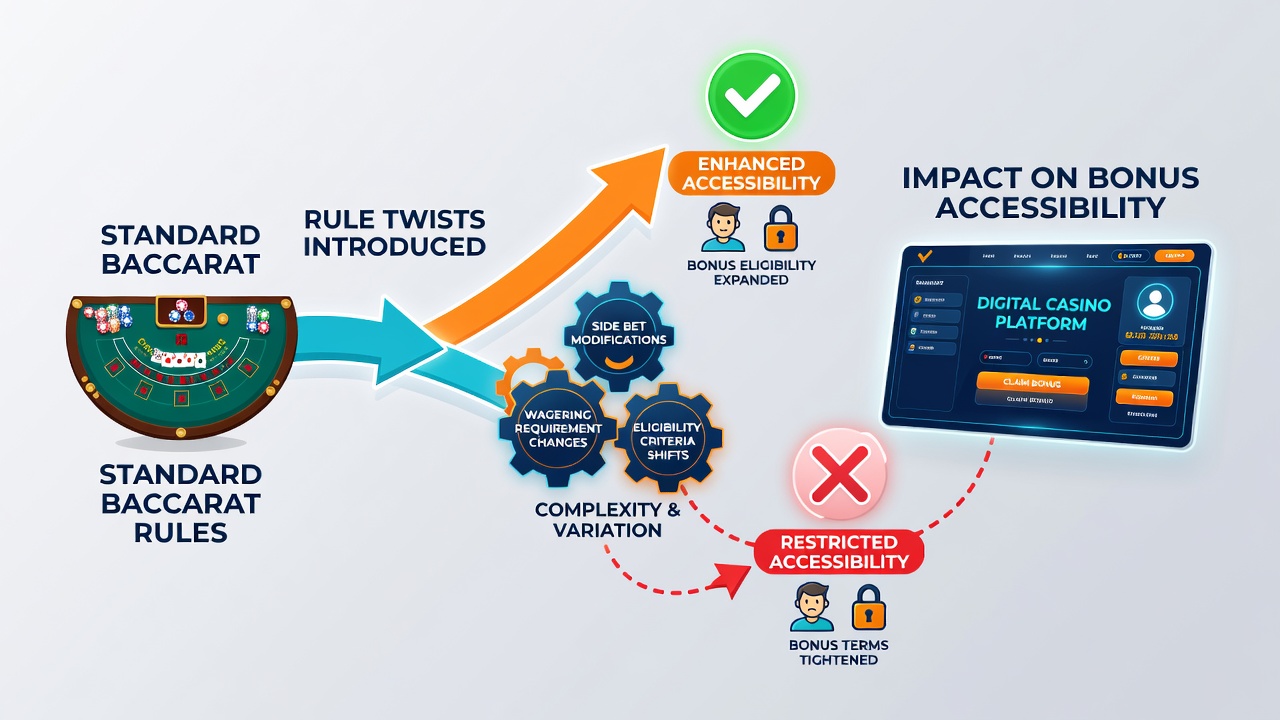
One study conducted by researchers at the University of Nevada, Las Vegas tracked bonus redemption rates across rule-modified baccarat titles and found measurable differences in completion times when tie payouts varied. Those findings align with reports from the Nevada Gaming Control Board, which document how digital operators adjust eligible game lists quarterly to reflect new configurations. Players therefore check current rule parameters before committing bonus funds, since a seemingly minor change like deck penetration adjustments can exclude an entire table from a welcome package.
Regional Regulatory Influences on Accessibility
Jurisdictions apply distinct oversight to these mechanics, and the resulting patchwork means a bonus available in one market may exclude certain rule variants that remain permitted elsewhere. European operators often face stricter contribution caps tied to consumer protection rules, while North American platforms emphasize clear labeling of side bet impacts. Industry reports from the Australian Gambling Research Centre highlight how rule transparency requirements have led platforms to embed rule summaries directly into bonus claim flows, reducing instances where players select ineligible tables.
Cross-border play further complicates matters because virtual private networks can expose users to mismatched rule and bonus combinations that local licenses do not cover. Operators respond by geo-fencing promotions and displaying rule disclaimers at the point of game selection, a practice that has grown more standardized since mid-2025 updates.
Technological Adaptations and Player Navigation
Software providers integrate rule selectors into lobby interfaces so that players can filter tables by commission type or payout structure before applying bonuses, and these tools reduce accidental use of non-contributing games. Real-time updates push new configurations to live tables during promotional windows, requiring operators to refresh eligibility databases instantly to avoid disputes. Figures from platform analytics show that such filtering features correlate with higher bonus completion rates when users understand the underlying rule differences upfront.
Partnerships between game studios and casino networks have also produced standardized rule tags that bonus systems read automatically, streamlining the process across multiple sites. This integration helps maintain consistency even as individual operators experiment with hybrid formats that blend elements from punto banco and chemin de fer.
Conclusion
Rule modifications in digital baccarat continue to reshape bonus accessibility by altering contribution percentages, eligibility filters, and redemption timelines across platforms. Operators, regulators, and software providers each play defined roles in communicating these connections, and the resulting frameworks determine which promotions remain practical for different player segments. Continued documentation of these interactions supports clearer navigation for users who select games based on both entertainment value and promotional fit.