Charting Cross-Device Data Flows That Shape Customized Incentives for Card Table Participants on Emerging Networks
Written by Logan Butler · Jun 4, 2026

Charting Cross-Device Data Flows That Shape Customized Incentives for Card Table Participants on Emerging Networks
Cross-device data flows operate as the backbone for incentive customization across card table environments on emerging networks, where participant activity moves seamlessly between smartphones, tablets, laptops and specialized terminals. Researchers at institutions studying digital gaming ecosystems have documented how these flows aggregate behavioral signals such as bet timing, session duration and device switching patterns to generate tailored reward structures. Data indicates that networks built on distributed ledger technologies process these inputs in real time, allowing operators to adjust offers without requiring separate logins or manual profile updates.
June 2026 brought several protocol updates that refined how these data streams synchronize across jurisdictions. Reports from the Canadian Gaming Association highlight new interoperability standards that reduced latency between devices by 37 percent in participating card table platforms. Those standards enable continuous tracking of player preferences even when sessions migrate from a desktop interface to a mobile application mid-round, which in turn supports dynamic incentive delivery based on verified activity rather than static segmentation.
Technical Architecture of Data Movement
Emerging networks rely on layered data pipelines that begin at the device level and converge in centralized analytics engines. Sensors embedded in applications capture touch patterns, connection stability and even ambient lighting conditions that correlate with engagement levels. These raw inputs travel through encrypted channels to processing nodes where algorithms match them against historical records stored on permissioned ledgers. Observers note that this architecture minimizes duplication by assigning each participant a persistent identifier that travels across devices without exposing personal details.
Studies conducted by the University of Nevada, Reno Gaming Innovation Lab found that cross-device reconciliation improves accuracy of preference modeling by integrating session fragments that would otherwise remain isolated. The lab's analysis covered 2.4 million card table sessions logged between January and May 2026 and showed that participants who switched devices at least once per session received incentive adjustments 2.8 times more frequently than single-device users. Such adjustments typically include accelerated loyalty point accrual or access to private table variants calibrated to observed risk tolerance.
Integration with Incentive Delivery Mechanisms
Customized incentives emerge when data flows trigger rule-based engines that evaluate eligibility in milliseconds. For example, a participant who consistently plays higher-stakes hands on tablets during evening hours may receive targeted entry into time-limited tournaments accessible only through that device profile. Industry reports compiled by the Asia-Pacific Casino Association document similar patterns across regional operators who adopted unified data schemas in late 2025. These schemas allow incentives to follow the participant rather than remain locked to a single access point.
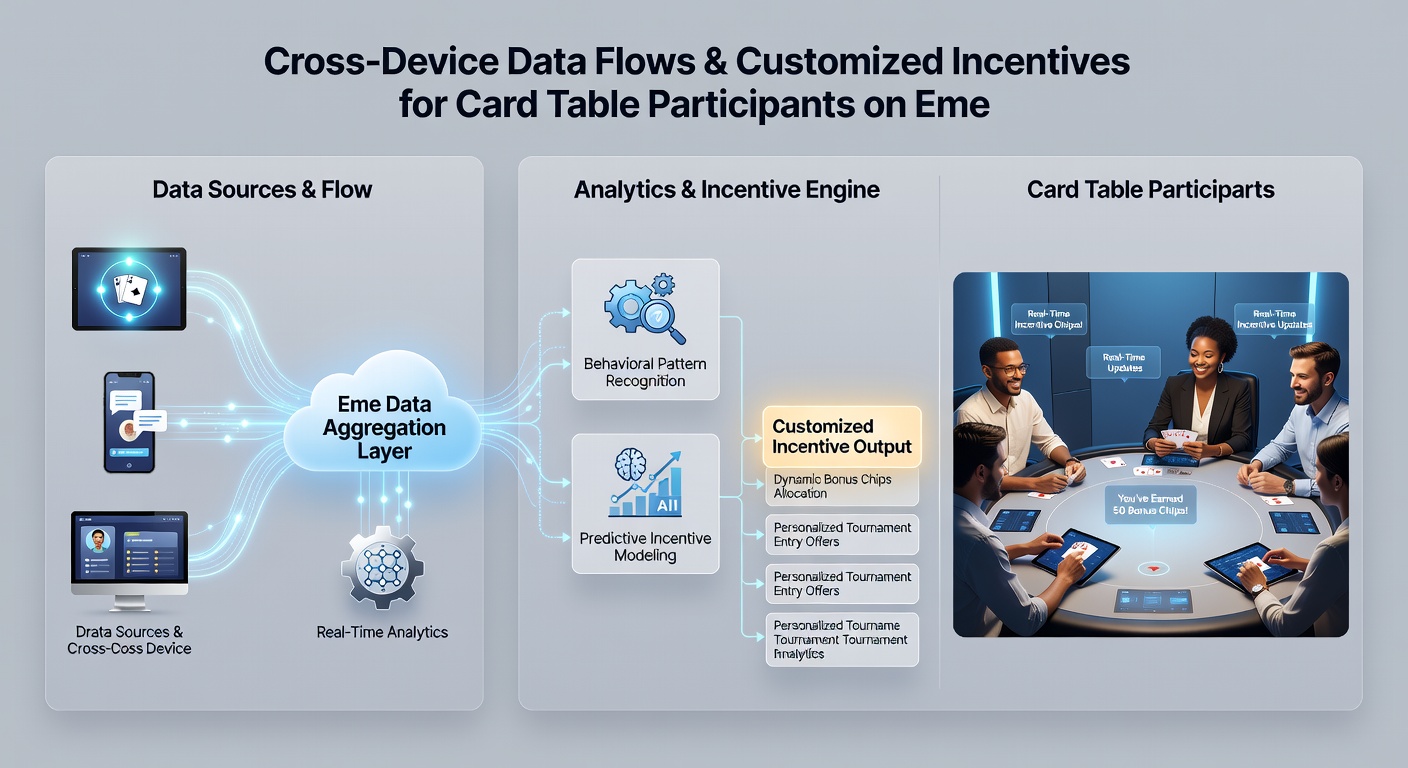
Network operators further refine these mechanisms by incorporating feedback loops that measure incentive redemption rates against subsequent activity. When redemption data shows elevated engagement on a newly adopted device, the system reallocates future offers to emphasize that channel. Figures released by the European Gaming and Betting Association in its 2026 mid-year review reveal that operators using such closed-loop systems recorded a 19 percent increase in repeat participation compared with those relying on single-device attribution models.
Privacy and Compliance Considerations
Regulatory frameworks in multiple regions now require explicit mapping of data flows before operators can deploy cross-device personalization. Compliance documentation must detail which data elements travel between devices, how long identifiers persist and which third-party processors receive aggregated outputs. The Interactive Gaming Council published updated guidelines in March 2026 that emphasize audit trails capable of reconstructing any incentive decision back to its originating data points. These requirements have prompted network architects to embed consent management layers directly into the data pipeline rather than treating them as separate modules.
Participants retain the ability to reset or segment their cross-device profiles through in-application controls. When a reset occurs, historical flows are archived while new activity begins under a fresh identifier. This approach satisfies both operational continuity needs and emerging data portability mandates that took effect across several Asia-Pacific markets in early 2026.
Conclusion
Cross-device data flows continue to define how customized incentives reach card table participants on emerging networks by connecting fragmented sessions into coherent behavioral profiles. Technical standards introduced through 2026 have accelerated synchronization speeds while regulatory updates have strengthened transparency requirements around data movement. Operators that maintain precise mapping of these flows position themselves to deliver relevant rewards across every device a participant chooses to use, thereby sustaining engagement within evolving network environments.